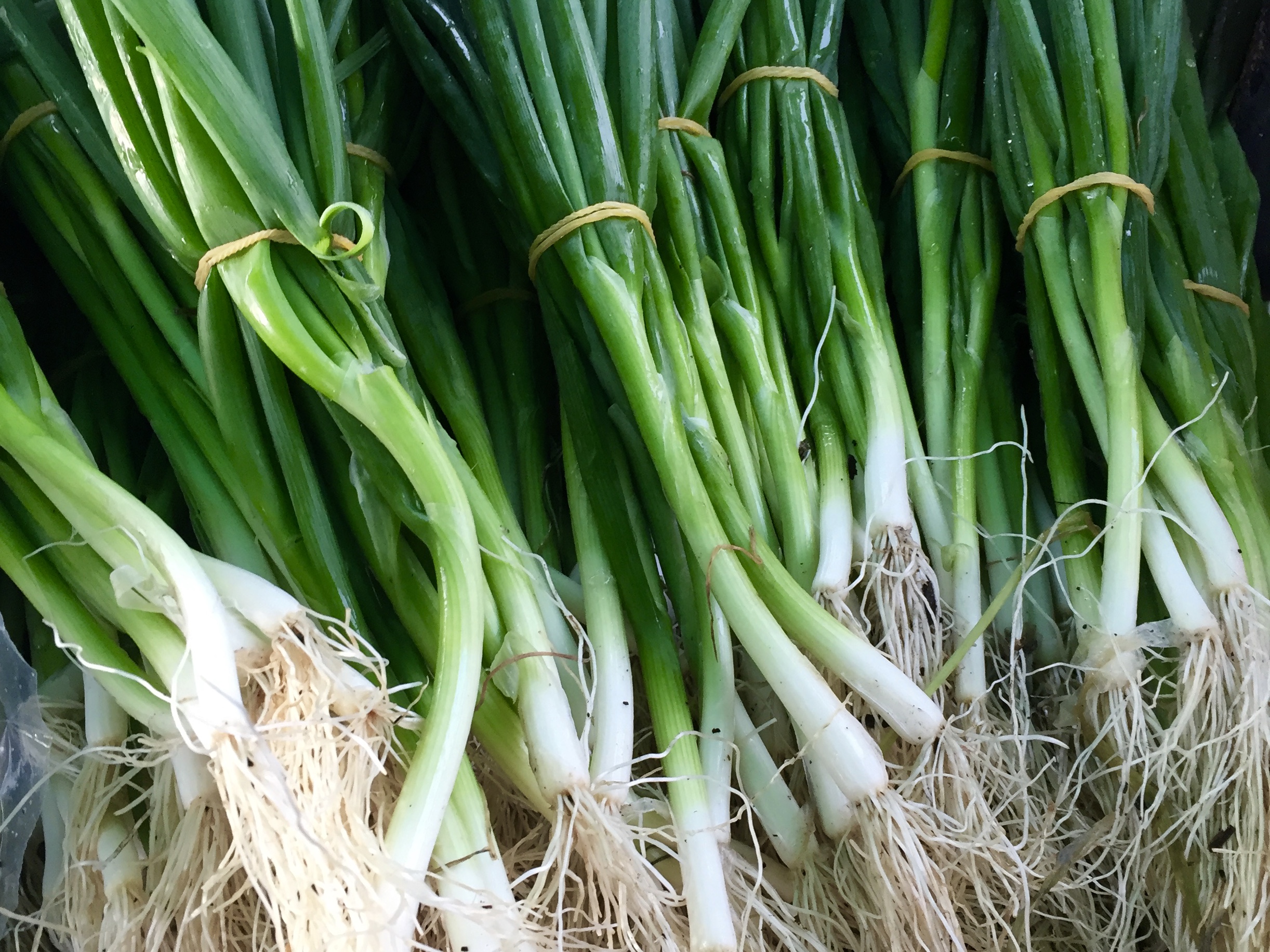
It’s officially spring in our part of the world. Thoughts turn to lighter foods. There’s a vegetable perfect for those lighter foods, and with the season in its name, although others might call it scallion, or green onion, or salad onion.
It’s now the season for spring onions. But what’s the difference between these onions and the good old brown onions we know and love...
A healing onion
The onion (allium species) is native to central and western Asia and has been used for more than 6,000 years. Like garlic, to which it is related, the onion is credited with healing powers, ranging from curing the common cold, to improving poor sight, and warding off evil. All good stuff indeed.
Scallion, ramp, salad onion, green onion, green shallot… These are all names for something in the allium family longer than an onion, less bulbous than a shallot and thicker than a chive. Although recognised individually, they are in fact the same thing, an immature onion.
And, in New Zealand, we generally call them spring onions.
Young and now
So spring onions are in fact very young onions, harvested before the bulb has had a chance to swell. They are often planted as seedlings in late autumn and then harvested the next spring, and so the word "spring" in the name. Of course, in many parts of New Zealand they can be grown year-round and are now available throughout the year - but the youngest and most tender onions are usually found in spring and early summer. Now’s the time.
To answer that “what’s the difference” question: brown or dry onions are left in the ground until the tops die down, and green or spring onions are pulled while still young and before the bulb is fully formed. Both the long, slender green tops and the small white bulb are edible, and are good either raw or cooked. They have a similar flavour to onions, but are much milder.
An ancient food
Onions have been used as a foodstuff since prehistoric times and were cultivated by the Egyptians, Greeks and Romans. Chinese literature dating back over 2,000 years refers spring onions.
Through China, many varieties of long tubular onion are eaten, and all go by the name cong. A scattering of cong is often the final zingy touch in a stir-fry. Think of the Chinese trio of garlic, ginger and spring onion, perfect with any kind of seafood. And cong is a key part of the favourite Peking Duck pancake combination.
Raw and cooked
A spring-time mistake might be to assume that spring onions are not for cooking, and only for raw. It's not that raw spring onions are bad, a little definitely lifts a bowl of salsa or guacamole.
But, with some heat, spring onions really sing. They’re great roasted whole with olive oil and salt, or included as little green additions to a bowl of buttery mash.
Nonetheless, a favourite spring-time effort is a simple salsa, for use on all manner of dishes... click here for more.