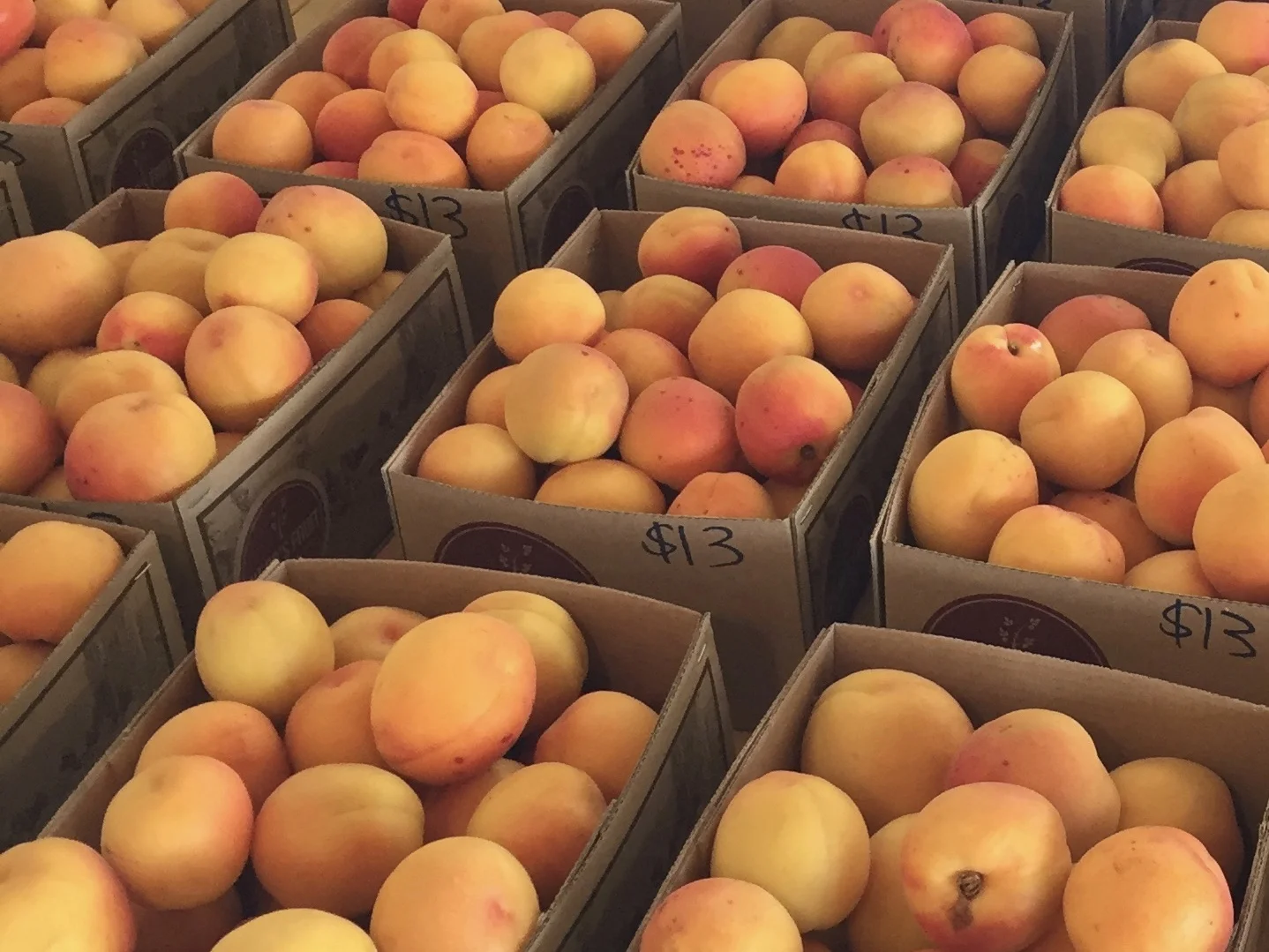
A box of golden Central Otago apricots arrived on the doorstep this week, and we were again transported to the Cromwell roadside stall. This delivery represented that region so well. Apricots grow best in areas of cool winters, hot dry summers with plenty of sunshine hours and low humidity. And Central certainly provides this environment.
Apricots are perfect for drying, preserving and bottling, for future months. But there’s a super easy delicious way to enjoy them right now too.
New Zealand’s biggest drupe crop
Apricots (like peaches, nectarines, plums and cherries) belong to a group called stone fruit, also known as drupes. The name comes from the tough, inedible “stone” in the centre. The stone is sometimes called the seed but, in truth, the seed is actually inside the stone.
We think of the fruit as apricot in colour, but they range from yellow to orange, often tinged red on the side most exposed to the sun. The surface can be smooth, or velvety with very short hairs. The flesh is usually firm and not very juicy, the taste ranging from sweet to tart.
And apricots are New Zealand’s main stone fruit crop, making up some 30% of the annual total, of which in recent years more than half have been exported. They are a true summer fruit, enjoyed from January to March.
They have traditionally been grown in Central Otago because of the dry climate, with plenty of sunshine and low humidity: they also need a period of winter chilling to set buds successfully in the spring.
Back in the 1970s, around 90% of our apricots came from Central. And the many names reflect that part of our country: Clutha Sun, Clutha Gold, Alex, Nevis. Since then, they have also been grown in Hawke’s Bay and Marlborough, although competing there with grapevines for land.
A Chinese connection
There is a bit of dispute over the origin of the apricot.
It was known in Armenia during ancient times, and has been cultivated there for so long that it’s often assumed to have come from there: the scientific name (Prunus armeniaca) reflects that assumption.
Other sources say that the apricot was first cultivated in India, some say China. Regardless of origin, cuttings of apricot trees made their way to Europe from China, via the Silk Road through the Far East and then through to the Mediterranean. (Think of all those Moroccan and Persian cuisine recipes combining meat with spices and dried fruit, often apricots.) And then the Spanish explorers introduced the apricot to the New World.
And we’ve read of the Chinese associating the apricot with education and medicine. The story goes that Confucius taught his students in a forum surrounded by apricot trees. And apricot kernels are used in traditional Chinese medicine. Apparently one physician, during the Three Kingdoms period, took no payment from patients, except that they plant apricot trees in his orchard on recovering from illness. This resulted in a large grove of apricot trees (and a steady supply of medicinal ingredients...).
And for us nowadays, happily Central Otago offers some - thanks Webb’s Orchards, for the great delivery service. But most of the world’s apricots are produced in California, Iran, Turkey and Australia.
And to dry an apricot
Californians developed the art of drying apricots, although the world's largest producer of dried apricots is now Turkey. Fruit is dampened and then stacked on racks in sulphur houses: the sulphur helps retain the flavour and colour. The sun does the rest of the work. And it takes around 6kg of fresh apricots to produce 1kg of dried. That explains the price difference.
The colour becomes vivid orange when treated with sulphur dioxide, E220. Organic fruit not treated with sulphur vapour is darker in colour and has a coarser texture. It’s true: we have tried the drying process here ourselves - slices on baking paper trays in a very low oven (120 deg C) for a very long time (think 6-8 hours).
Beyond drying, there’s preserving and bottling, for future months. But there’s a super easy delicious way to enjoy them right now too. For pre-dinner drinks or a delicious dessert, click here.