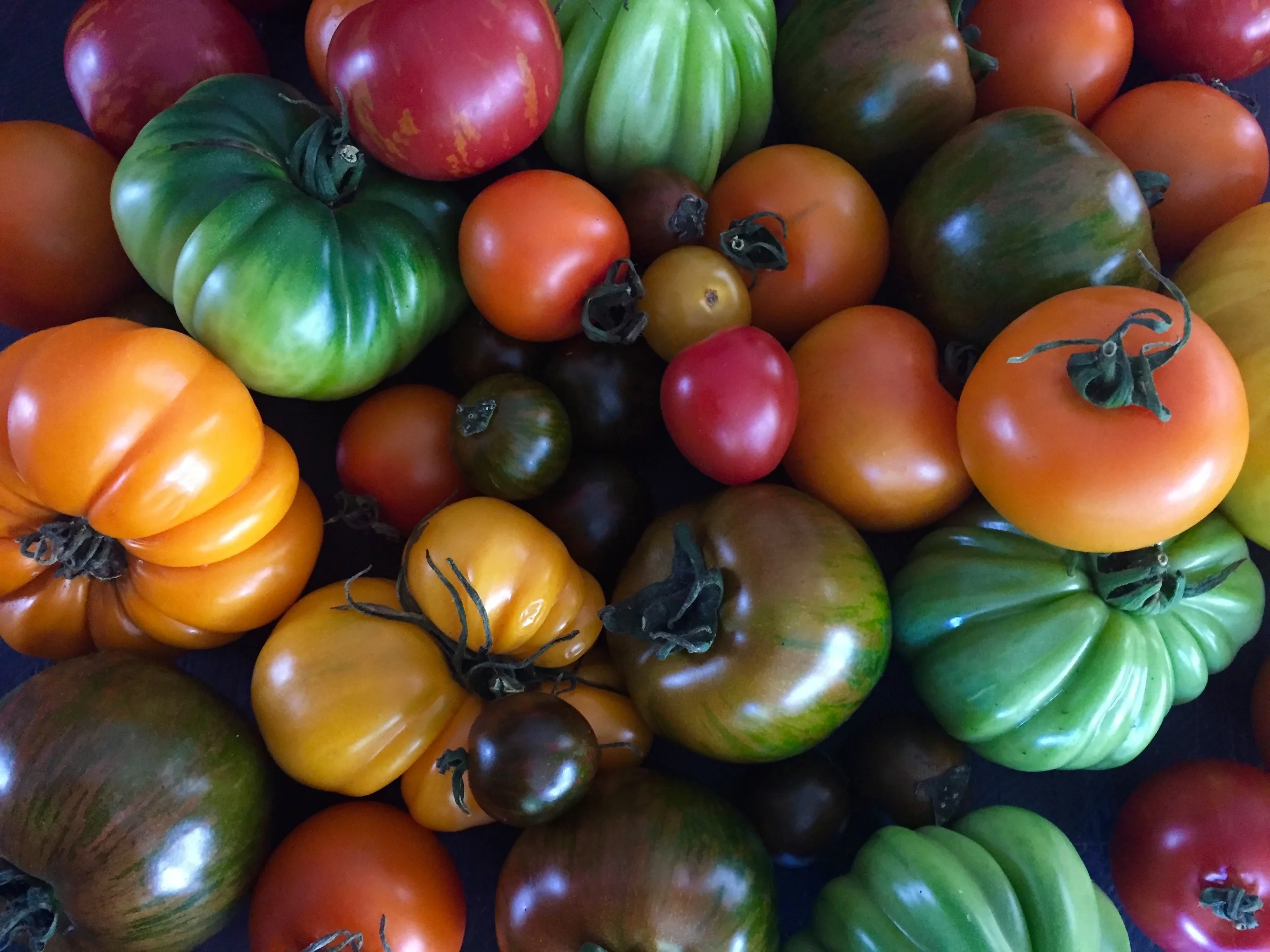
It is the essence of summer, the taste of a sweet red tomato grown in the sunshine. As some of the most widely consumed produce here and in many other countries, we have learnt a few things about these summer favourites.
Do you know where tomatoes first came from? And which country do you think is the biggest tomato producer? The answers might surprise you.
So where are they from?
We guessed Italy. We were wrong. Tomatoes were first discovered in Mexico / South America. From there they were taken with the Spanish explorers to Europe, where they grew easily in Mediterranean climates.
Tomatoes took a while to catch on as food for the table. It seems hard to believe, but initially they were grown as ornamentals in flower beds - a testament to their amazing colour. They are part of the nightshade family, and were at first suspiciously regarded as poisonous. (While the fruit is edible, the leaves are definitely poisonous.)
They have some delightful names - pomme d’amour (the apple of love) in France, pomo d’oro (the golden apple) in Italy. The Italian name presumably refers to varieties of yellow or orange colouring. There are literally hundreds of tomato varieties, which come in a huge array of colours and shapes. So, while everyone thinks about tomato red, tomatoes go right across a spectrum of colours, as our cover photo shows!
And as for which country produces the most…. China. Tens of millions of tonnes of them…
La Tomatina
Many of you will have heard of, and perhaps even attended, a Valencian festival, held every last Wednesday of August, in the town of Bunol. Here thousands upon thousands of kilos of overripe tomatoes are thrown in a giant tomato fight. This festival has its origins in an inadvertent vegetable throwing fight in 1945, and the tradition seems to have stuck. Que loco!
Fruit or vege?
Tomatoes are a fruit - because they have seeds inside them just like other fruits. They don’t have the dessert quality sweetness of other fruits, and so are typically served as a vegetable. But like other fruits, they are better kept out of the fridge to maintain their flavour.
For the lawyers out there, an 1893 US Supreme Court decision (Nix v Hedden) had to rule on the status of the tomato, for the purpose of determining whether it was a vegetable (subject to tax), or a fruit… And for these fiscal purposes, the Court declared it a vegetable - a decision based on their common usage. And now you might hear of the phrase “culinary vegetable”. Legalities aside, botanically a fruit it remains.
And to New Zealand’s tomatoes
Tomatoes are widely grown in New Zealand. They can be a disease prone crop, and less common heritage varieties are not often huge fruiters. So that explains the price difference between heritage tomatoes grown by natural methods, and other commercially grown varieties bred for crop abundance and disease prevention. Put simply, it is much trickier to grow delicious and interesting heritage varieties, and that is what you pay for.
New Zealand has some amazing heritage tomato growers. If you do get a chance to try any, we definitely recommend it. A couple of locals that we have been enjoying lately are Curious Croppers and eighty4. And, in the height of summer and our tomato enjoyment, we’d like to thank all our heritage growers for their effort and their fabulous produce.
So widely used
The tomato has an impressive string of uses. Think salads, soups (hot and cold), sauces, salsas, puree, paste, juice, cocktails… And who can forget their place in some prominent bad jokes… Why did the tomato blush? It saw the salad dressing.
Joking aside, one of our absolute summer favourite uses is a brunch tomato and nectarine salad idea. Click here to see it - it is a great match with barbecued bacon.