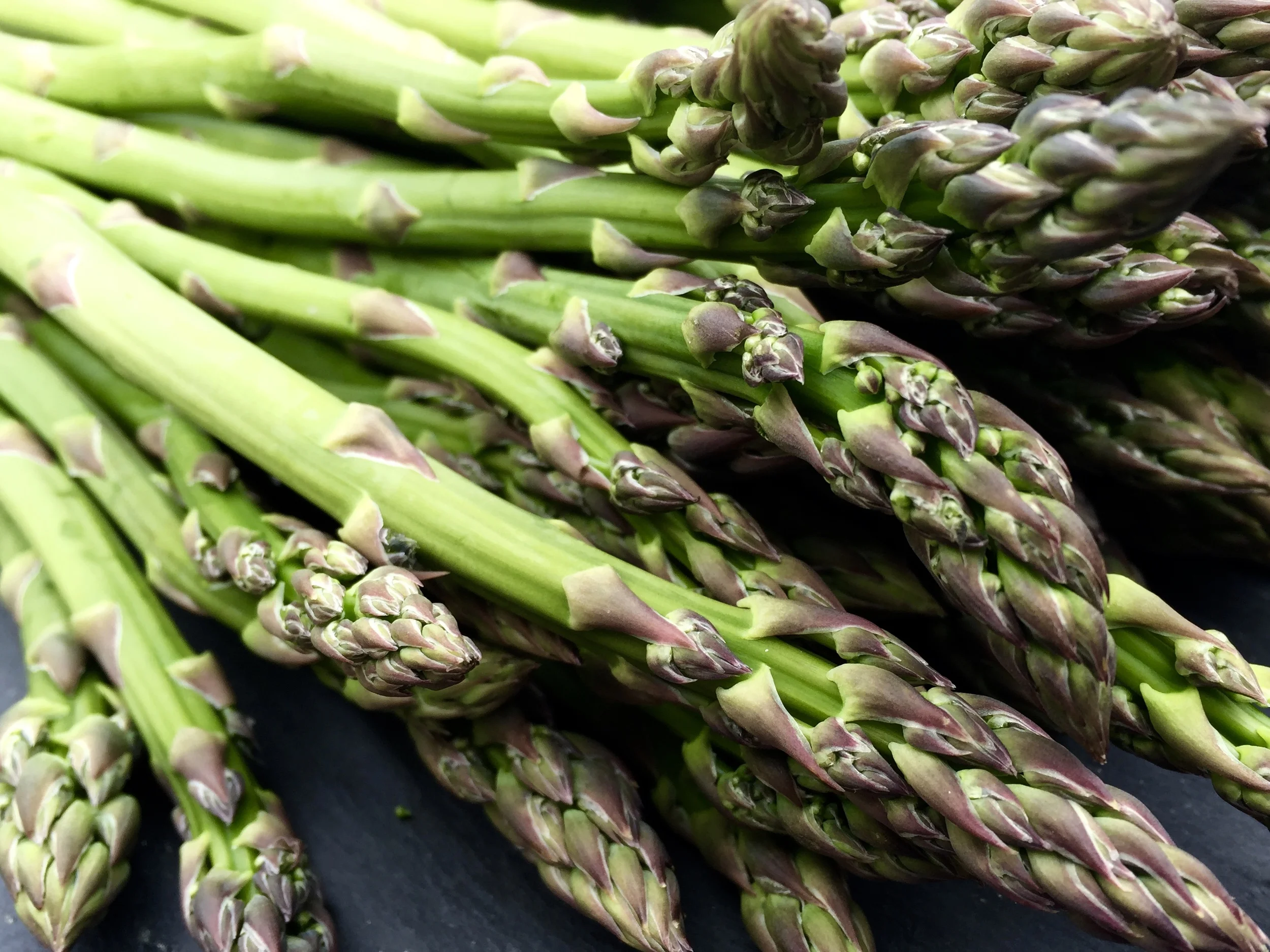
We are big believers that, if a fruit or vegetable has a short growing season, then the best thing we can do is eat as much of it as we can when it is fresh - and enjoy it before it is gone again. And so it is with asparagus.
From October to December, for only around 100 days, the New Zealand asparagus season is here. Steamed, roasted, barbecued, and just raw, it takes pride of place. And there is an asparagus idea which we have been eating a lot this spring - we’ll tell you about that shortly.
A perennial crown root
Asparagus is a perennial (bulb and stem vegetable) plant, native to eastern Mediterranean areas. It is one of a few vegetables from a perennial plant, along with artichokes, horseradish, and rhubarb.
It can be grown by seed, but most farmers and gardeners instead plant asparagus “crowns”, the dormant roots. The crowns look like a strange sea creature, with roots for tentacles and a head in the middle where the spears sprout.
Asparagus takes at least a year after planting to first harvest: all energy goes into the root system. By the third or fourth year, all spears that emerge can be harvested. And a plant can then produce for up to 20 years. So the labour intensive and demanding crop rewards the effort.
A shoot for Caesar and Louis
The name “asparagus” comes from the Greek, meaning “sprout” or “shoot”. The plant is a member of the lily family. Think onions, garlic, leeks, turnips and gladioli.
The ancient Greeks loved wild asparagus, but the Romans first cultivated it, over 2,000 years ago. Caesar Augustus is credited with the phrase “velocius quam asparagi conquantur”, meaning to do something faster than you can cook asparagus - and that’s pretty quick. Remember that over-cooking ruins this spring favourite.
Asparagus gained popularity in France and England in the 16th century, often called the “food of kings.” We have read that Louis XIV was so fond of it he ordered special greenhouses, and grew asparagus in his Versailles hothouses year round. We’ll leave year-round eating to the French king. A short New Zealand spring season makes it all the more special.
New Zealand's fresh spring harvest
Here around 50 growers produce up to 3,000 tonnes of asparagus annually, over 600 hectares. The crop is for fresh sale in New Zealand, canning and export: nearly 85% is consumed fresh here, 10% is shipped to Japan and Australia, and the small remainder is canned.
What a big change that is from a generation or two ago: in the 1980s about half of all New Zealand-grown asparagus was canned. Remember those tins of asparagus for quiches and white bread rolls - so different (and much nicer, we say) with a fresh asparagus substitute.
Green, purple, white
We have enjoyed fresh green and purple asparagus this season. The green is what we see most often, but the purple is a great mix and, we have read, contains more antioxidants than the green. Purple spears tend to go greenish in colour once cooked, so for colour contrast they are best raw in salads. And then there is the white.
This month, with thoughts of Europe and in particular Paris, we recall the white asparagus eaten there and sold widely in jars. The white spears are not a separate variety, instead green or purple spears that have been grown without access to light. Soil is piled up over it, as it grows, so it never sees daylight until cut. And, without light, the chlorophyll (remember science class - the green pigment) does not develop. The taste of white asparagus is slightly nutty, and a little less bitter. Our thoughts are with its enthusiasts in France.
Stalks of deliciousness
We love the description, funny little stalks of deliciousness. Everyone has a favourite way to enjoy the stalks, but there’s a way we have been eating as much of as we can while the season is here. For a bright asparagus (and pea) idea, click here.