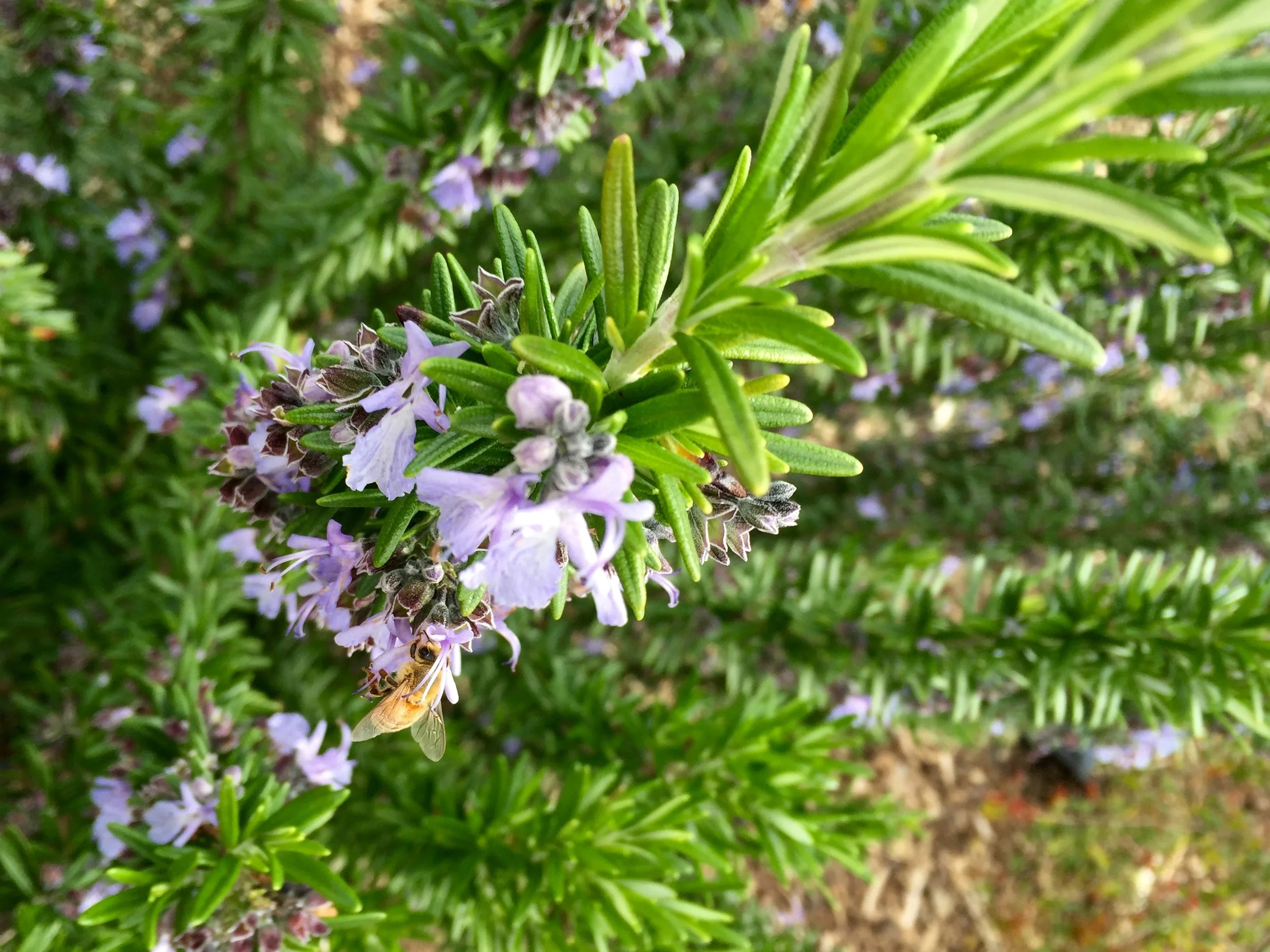
Rosemary flourishing, in gorgeous purple flower, in the New Zealand spring, inspired us to look at this interesting herb a little more closely.
Not to mention the classic aromatic combination of rosemary and slow cooked spring lamb filling the kitchen. Followed by a simple sweet treat using this classic herb - more on that soon.
Mediterranean sea dew
Rosemary is a Mediterranean native. It is these Mediterranean roots which see rosemary traditionally paired with grilled meats. It is a great combination, with rosemary’s penetrating freshness working well to balance out the fattier gamier profile of grilled meats.
With its eucalyptus notes, its membership of the mint family will not surprise. We have read its name - ros, for dew, and marinus, for sea - links to the wild and rocky Mediterranean coastline where it grows wild, unirrigated, surviving on moisture given off by the sea. And another curious fact - the oil content of Mediterranean mint family herbs (like rosemary) will be higher on the side of the plant facing the sun. And so, with that, differences in flavour.
A favourite for the bees
There are many rosemary varieties, and it enjoys tough growing conditions, poor dry soils and hot sun - which help concentrate its flavour and aroma. Most commonly you see the upright types, like tuscan blue. Trailing varieties are attractive, but they are not so flavoursome in cooking.
There is an abundance of flowering rosemary in our gardens and in the streets all around us right now. One thing we especially noticed, as we started looking more closely, is that bees find their blue flowers irresistible. And for more on bees and how that rosemary nectar is turned into honey, click here.
For baldness, for strong women, for marriage, and for remembrance
Research records rosemary as the most widely known herb in the history of folklore and medicine. So there are many intriguing associations of rosemary…
Some of you may be interested to know of its role in “curing” baldness - we have read its oils stimulate the hair glands.
We have also found reference to an historical saying: “where rosemary flourishes, the lady rules”. But men, be warned, legend has it that damaging or destroying your rosemary will not provide relief from a lady’s rule.
It has a strong association with love, often somewhere in the bridal flowers. Indeed, these nuptial associations are longstanding. Rosemary is perhaps most famously recorded as adorning the hair of Anne of Cleves upon her marriage to Henry VIII.
But the best association for rosemary, we think, is as the herb which is sacred to remembrance. To take the words of Ophelia, in Hamlet: “There’s rosemary for you, that’s for remembrance! Pray you, love, remember.”
So perhaps all those sitting exams (some about now, perhaps) might need to put a wee sprig of rosemary in your pocket, and study with a vase of fresh rosemary alongside. (Think here of the Greek scholars, with a garland of rosemary about their heads.) Not to mention fueling up the night before on a lamb salad, slow cooked with rosemary (click here), or with rosemary roast potatoes. And, if you have plentiful rosemary to hand in the garden, don’t forget to throw some sprigs on the barbecue or an outdoor fire, to scent the smoke.
And now for our rosemary idea. While rosemary is so often used as a flavour in savoury dishes, don’t forget that its minty and floral notes also lend well to sweets. For our sweet rosemary petit four idea, click here.