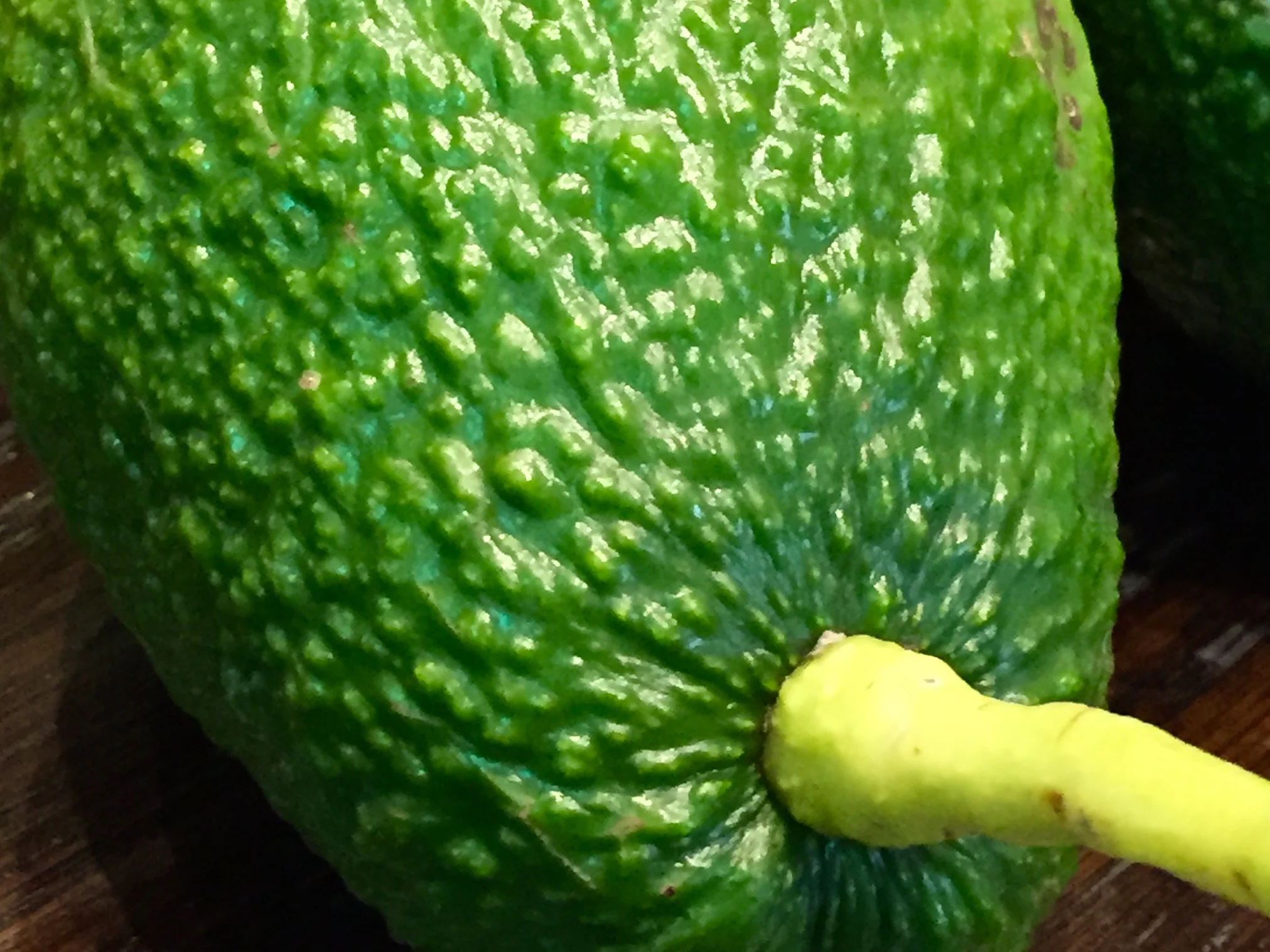
So here is another all time favourite, versatile fruit (yes, a fruit, not a vegetable). And, having luck on side, there is a giant avocado tree in the back yard, planted many many years ago - providing perfect avocados (hass) nearly all year round.
With guacamole “season” on its way, it seemed a fitting time to look a little closer into their green delicious creaminess, and an idea for using them that we really like.
Some basics
Being blessed with our 10 metre high avocado tree, there were some key things we had to learn about avocados.
First, you need to pick avocados off the tree. Don’t let them fall. The birds will get there well before you do. No matter how quick you are.
Second, avocados - although they mature on the tree (so you should not pick them too early) - they ripen only off the tree. Avocado leaves have a hormone that inhibits the production of the ripening chemical, ethylene. So you must pick them hard, off the tree.
Third, if you want to speed up the ripening process, pop them in a paper bag to trap their ethylene gas. Add a banana or apple to hurry it along even more. Refrigerate them only the moment that there is a hint of give in the skin signalling the flesh is softening.
Fourth, should you buy them, then you really should buy them hard and let them ripen at home. Then you control the ripening process. It means you have to plan ahead, but you will definitely be rewarded for doing so.
What’s in a name?
There are a few curious linkages with the avocado’s name. It’s native to Mexico and Central America, and its Spanish name, “aguacate", is derived from the Nahuatl work “āhuacati” - which can also mean testicle… The more similar sounding Spanish word, “abogado”, in fact means lawyer.
But we most like the usage, in parts of India, of the term which in English means “butter fruit”. This sums it up somewhat perfectly, referring precisely to the markedly higher good-for-you fat content of the avocado, which distinguishes the avocado from virtually all other fruit.
To throw an evolutionary curiosity into the mix, we have also read that the avocado may have originally evolved to support now-extinct large mammals (aka dinosaurs, we suppose), and vice versa. As you know, typically fruit seeds are dispersed by animal consumption… It’s fair to say that there are not any animals we can think of these days that serve the avocado in this way!
How did avocados end up here?
The hass avocado is the one we see most commonly in New Zealand - and it accounts for around eighty percent of the cultivated avocados in the world. Our research says that all present day “hass” trees descended from a single “mother tree”, that a certain Rudolph Hass of California owned and patented in 1935.
And our research uncovered reference to a Califiornian Avocado Yearbook writing that the first avocado (not a hass) was likely introduced here in the Gisborne area, in around the 1920s, and was commercially marketed around the early 1940s. Now, of course, nearly a century on, avocados (hass) have become one of New Zealand’s largest fresh fruit exports.
New Zealand is also fortunate in that, with the varieties that have been successfully grown here - hass (an oval pear shape, with black skin when ripe), and renowned for its strong fruiting only every second year; reed (the bowling ball round one, with green skin when ripe); and fuerte (meaning “strong”, it’s more of a true pear shape, with green skin when ripe) - avocados can be harvested through the whole year.
So, if you are wanting some inspiration for getting through this bountiful year round supply, try our creamy avocado dressing idea - click here.