With the year end fast approaching, everywhere we look we are reminded of pavlova, piled high with fresh summer berries. It could be fair to call it quintessentially kiwi, it has become that much a part of New Zealand’s identity.
Of course, with one trans-tasman contest recently resolved in New Zealand’s favour, it seemed a fitting time to remind ourselves of the origins of another ongoing source of trans-tasman rivalry. And with pavlova top of mind, it is also a fitting time to explore some other interesting ways to serve this kiwi egg white classic, beyond its traditional summer appearance.
It’s up there, with Phar Lap and Crowded House
We have looked into this dessert debate - to discover, even, that whole books have been dedicated to the subject (finding, incidentally, in favour of its kiwi origins). So here is a brief potted summary.
Everyone is likely well aware of the origins of the pavlova’s name - referencing the great Russian ballerina, Anna Pavlova - who we admire for forming, in 1911, her own ballet company, which was the first to tour ballet around the world.
Her company toured down under in the 1920s. It is said her tutu with green cabbage roses was the inspiration for the pale, pillowy, light as air dessert, adorned with green kiwifruit, created by a Wellington hotel chef. This creation was closely followed by that of a chef based at Perth’s Esplanade Hotel, and on tasting it, professing it “as light as Pavlova”.
But, kiwis can relax. We have read that the Oxford English Dictionary rules that the pavlova was first baked in New Zealand in 1927. Perhaps not an obvious font of all things culinary but, according to our research, it seems to be have been taken as settling the matter.
And we have no doubt that the reason we still, to this day, argue the point is the universal appeal of the pavlova. Who wouldn’t want to call it their own!
Crisp on the outside, marshmallow on the inside
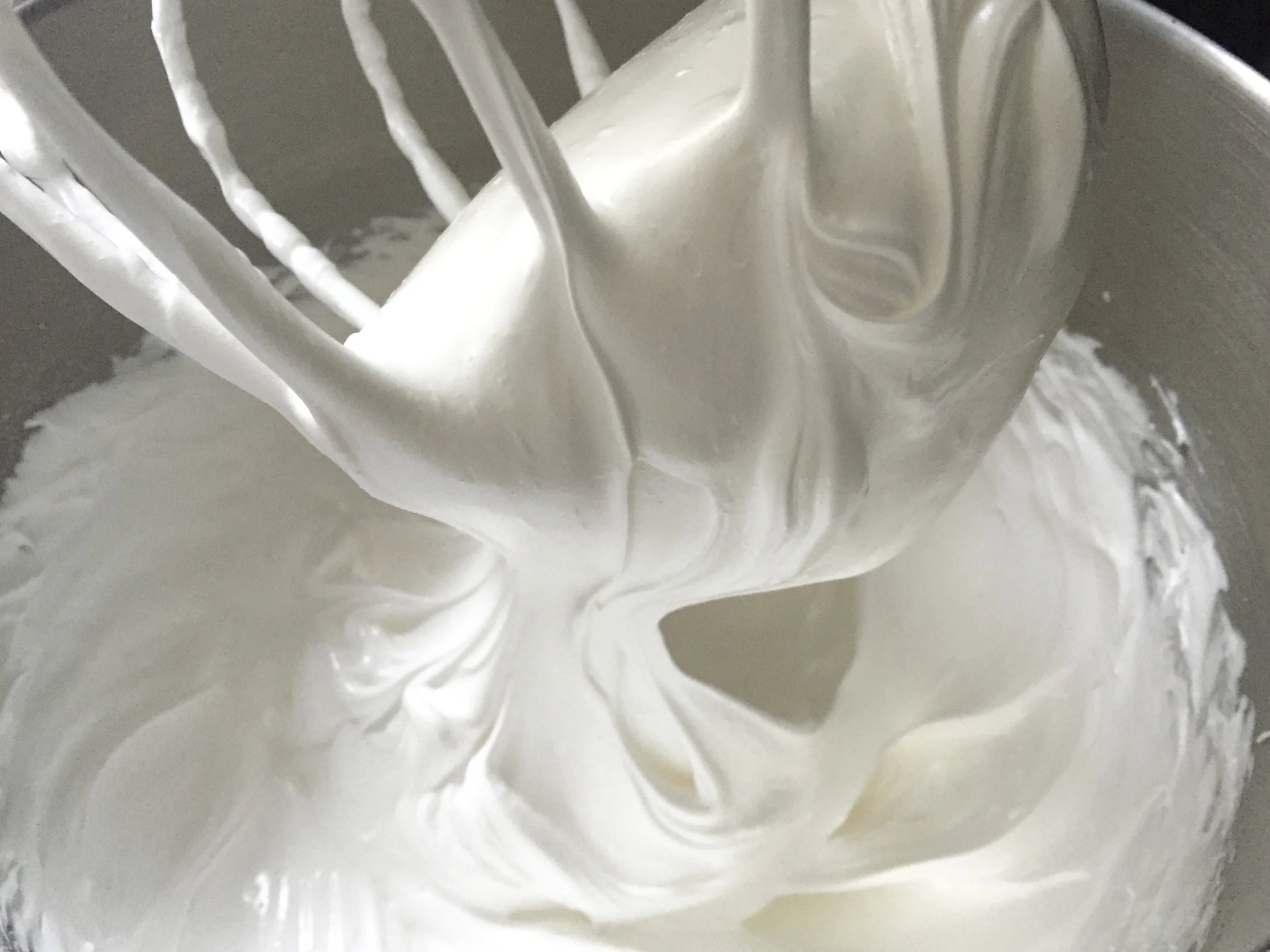
But do let’s remember one thing - whomever the inventor, neither Australia nor New Zealand invented the meringue. And a pavlova is, in short, a meringue spiked with vinegar or cream of tartar - an acid to make the egg white proteins, and so the foam, more stable - and cornflour. These contribute to the marshmallow effect, distinguishing the pav from the drier crispier meringue.
Of course, it all starts with eggs. (And, if you would like to read more of what we have written on eggs, click here.) Recipes often call for older eggs. Older egg whites are thinner and foam more easily.
It’s really important to get the yolk / white separation right for the whites to foam - they cannot suffer contact with any fat - so a spot of egg yolk is, in this context, a true disaster. Hence also the reason for metal bowls rather than plastic. Plastic is more likely to retain traces of fat on its surface.
Baking in silence…
One of us was always told that you had to keep quiet while the pav was baking… so is there any truth to this? It’s our considered (adult) view that this tale is no more than an excellent attempt to keep children quiet. And a very good one for parents, and grandparents, to remember.
It strikes us that occasions to keep children quiet arise year round. And, we think pavlova is just so good and simple to make. So perhaps the pav should break out from its summer confines, and be silencing the children, and on the dessert menu, right through the year. To see our true Anna Pavlova pavlova, and for our “through the seasons” pavlova ideas, click here.