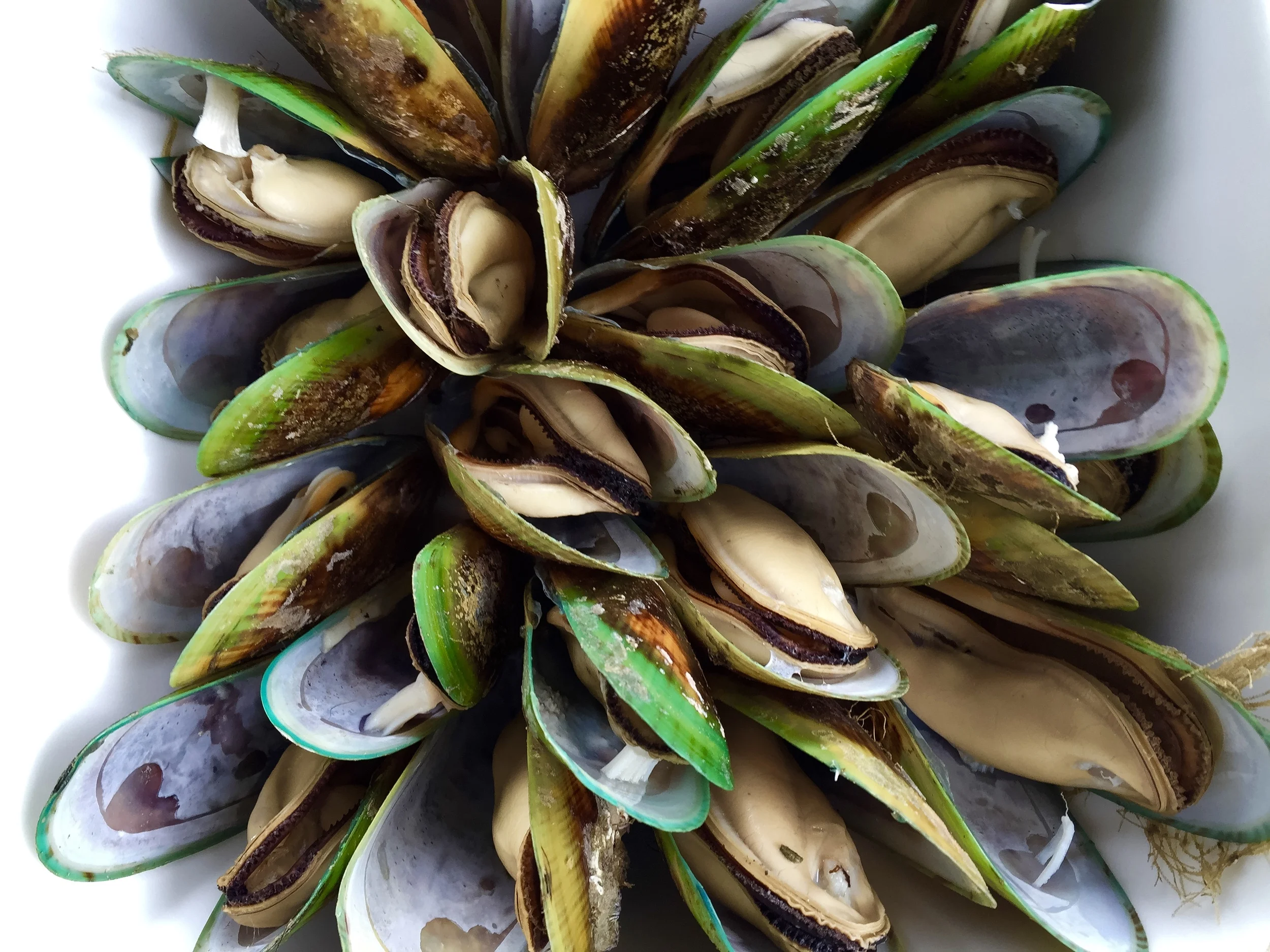
With quick dishes to feed the numbers in mind, and being near the beach, thoughts quickly turn to a favourite shellfish choice - the New Zealand green lipped mussel.
So readily identified by their emerald green markings, these bright coloured taste sensations are real New Zealand natives. Looking into them a little more closely revealed just what a powerhouse for the country those beautiful green shells represent. And we’ve also got our super quick idea for you to try.
A heavyweight of our seafood industry
Recent food and beverage economic reports identify seafood as one of New Zealand’s core export products. In some measure, this is explained by the abundant natural resources we have to enjoy here.
Did you know that New Zealand has the tenth longest coastline of any country in the world, and we enjoy 3.3 metres of coastline per person - second only to Norway on this front?
And our green lipped mussels account for a notable proportion (around 17%) by value of our exported seafood. We have also read that they are one of the largest single species of seafood we export (the largest, until recently overtaken by rock lobster/crayfish).
So where do they come from?
Green lipped mussels (known to Māori as kutai) are indigenous to New Zealand. We understand that the species aren’t found anywhere else, and their flesh is quite distinctive from other mussel species.
Mussel farming here has been around for a while - about 30 years or so. It was spearheaded by the overfishing of natural (seafloor) mussel beds. Now, there are mussel farms throughout the country’s sheltered waters, principally in the Marlborough Sounds, the Coromandel Peninsula/Hauraki Gulf, Nelson, Banks Peninsula and Stewart Island.
Our research indicates the industry has been largely reliant on wild mussel spat to kick the farming operations off - with the principal source being that attached to washed up seaweed on Northland’s Ninety Mile Beach. Spat volumes vary, of course, on prevailing weather patterns, and so will vary with La Niña and El Niño climate cycles.
They are "farm grown" in the natural coastal marine environment, on suspended long lines - around an 18 month process. The spat is attached to the longlines, and from there they live, and grow, pretty much in what would otherwise be their natural environment. And the emerald beauties grow… They can be up to 24 centimetres long, if left to their own devices. That’s quite long!
While they are green on the outside...
Some fun facts. Inside those beautiful green shells, have you ever wondered why some mussels have apricot coloured flesh, and some have white? Well the answer is simple - apricots are girls, creamy whites are boys.
And what are those beards all about? The beards are the threads which the mussels use to hang on to their homes (the ropes, or, in the wild, rocks). They aren’t nice to eat, and definitely best removed immediately.
There are many ways that you can buy these wonderful mussels - fresh, flash frozen, smoked and marinated. And they feature in many wonderful dishes. For one of our favourite super quick green lipped mussel ideas, click here.