It’s high summer here, and cool drinks on long days are in order.
A special favourite this summer has been a pitcher of elderflower spritzer, with lots of ice and rosemary found locally. We have our chosen cordial, not made ourselves this summer, but we’ve been thinking about the flower that flavours that drink. And we’ve remembered the beautiful Wairarapa elder trees we saw flowering late last spring.
But there’s a lot more to the elder tree, for summer enjoyment, than a cordial, or even a wine: elderflower and berry jelly, anyone?
A tree, a hedge, a weed
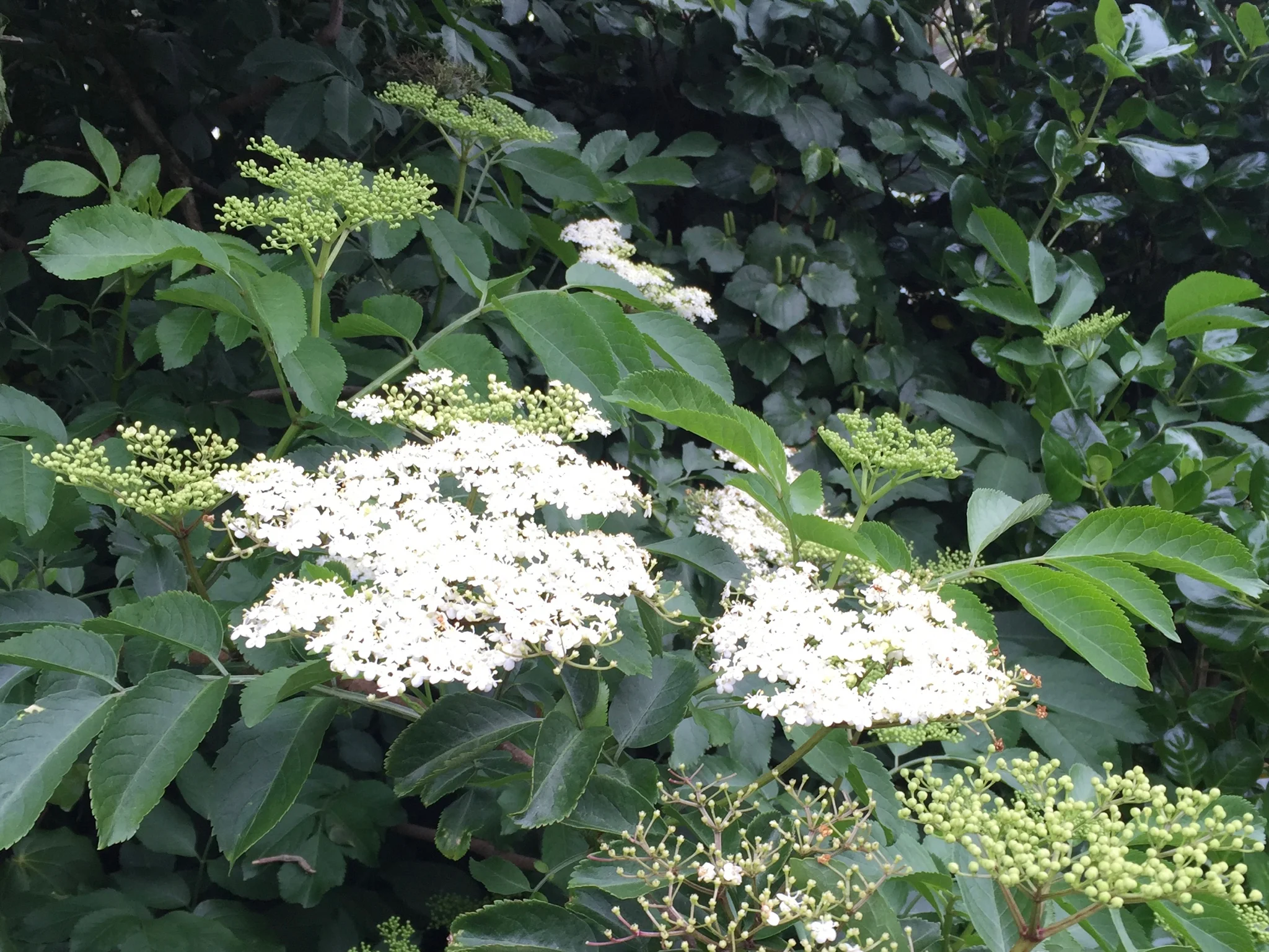
The elder tree (sambucus nigra) is a small deciduous tree, native to Britain and brought to New Zealand. It is common in parts here, especially in North Otago and Canterbury, and prefers areas with cold winters. We love the sight of the large plate-sized mass of white elderflowers and then dark, distinctive elderberries.
In Europe, the elder is found along hedgerows and is often considered a weed. And we have read that, down south here in New Zealand, it is regarded as a noxious weed too. Environment Southland details the elderberry as a “common weed of the bush remnants of Southland”, invasive along the bush edge where it forms dense stands replacing native trees and shrubs. In parts, hillsides are covered in the shrubby trees, spreading further thanks to birds and the seed-laden berries. But, in the north, the elder is a bit of a novelty, rarely growing wild.
Weed or not, the elder has two clear attractions: fragrant clusters of white flowers that appear for a few weeks each year, generally around late November for our late spring, and then (once the flowers have died off) masses of almost black berries that ripen in late summer. And here’s the best bit: those flowers and ripe berries can be made into cordials, wines, champagne, teas, jams - and jellies.
A tree of superstition
Not surprisingly, given its heritage, the elder tree is associated with superstition and powers. Traditional folklore holds the elder as sacred, protected by the Elder Mother who lived in its trunk - and many would not cut or burn the wood for fear of upsetting her.
And the elder would protect. If you grew it outside your front door, it was believed to keep evil spirits out. It would also protect from lightening strikes, when people sheltered during a storm, as legend says Christ’s cross was made from elder wood (although the tree’s small size make this connection unlikely….).
The aroma of elder leaves has long been known to repel flies, so bunches were hung by kitchen doors. Elder was traditionally planted around dairies, and thought to help keep the milk from “turning”. Cheese-cloths and other linen for dairying were hung out to dry on elder trees, and the smell they absorbed from the leaves may have helped dairy hygiene.
Of course, the elder tree is thought to have medicinal properties too. Every part (bark, leaves, flowers and berries) has been used in domestic medicine since the days of Hippocrates. No doubt that is why the colonial settlers brought the elder to these shores, for both culinary and medicinal uses - an earliest mention we have read of it being here is 1906.
A New Zealand cordial experience
There’s lots to be done with the elder tree. The flower heads can be fried in batter for sweet fritters. They give a muscatel flavour to stewed fruit, jellies and jam. And they are used for elderflower cordial, wine and champagne, while the berries can be boiled to make a syrup.
Once you have the flowers, you can make the cordial. But our favourite elderflower cordial this summer has been from the Aroha Drinks range, from the wild elderflowers that grow on a farm in Leeston, Canterbury. Beyond drinking the cordial, we have been using it as an ingredient. For a delicious and light summer dessert jelly idea, click here.