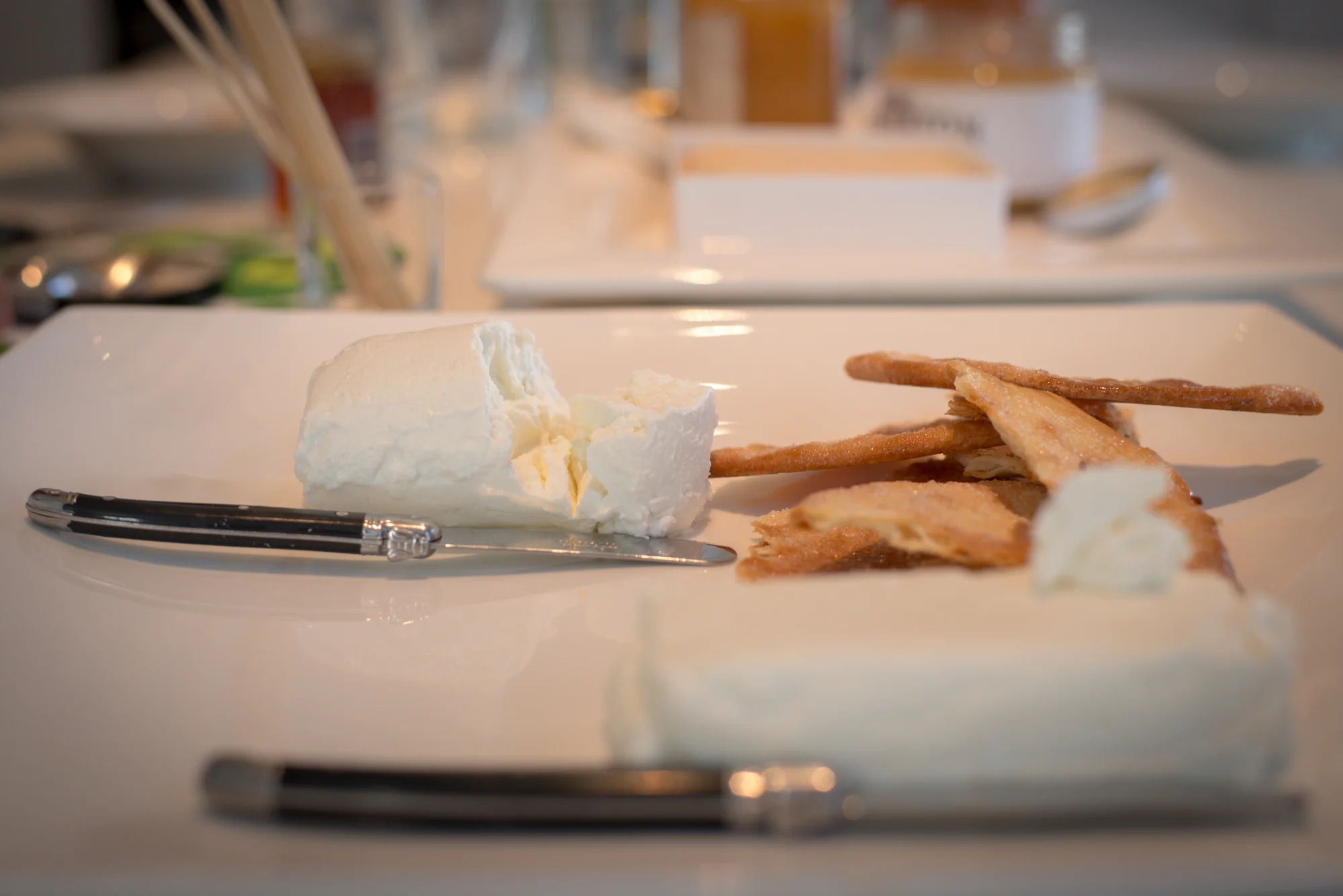
We are a land of sheep and dairy cows. But we are also home to goats.
The goat has been domesticated, around the world, for thousands of years. It can supply meat, milk and fibre, and has been an essential part of communities through the ages. Did you know that even today, world-wide, more people drink (and eat) milk (and meat) from goats than from any other animal?
It’s the goat’s milk that makes the cheese. And it’s the goat's cheese that we have been thinking about, and investigating.
World-class versions
We live in a land where what we grow and produce gets admired around the world. Our climate and elongated geography means that New Zealand produces food that, often originating elsewhere, now has world-class versions here.
So it is with our cheeses, in this instance goat’s milk cheese.
Goats arrive here
A milking goat is thought to have accompanied Captain James Cook on his first voyage to New Zealand back in 1769. A few years later, on his second voyage, Cook liberated English goats in the Marlborough Sounds.
And then goats were introduced to islands near shore and around the coast, to provide food for visiting ships. Goats were also released as food for prospectors, gold miners, and road and railway workers. These goats would provide both milk and meat. They ultimately formed the basis of our feral goat population.
New Zealand’s industry
The New Zealand dairy goat industry then developed about 1990. Several breeds are milked here. We have read that the Saanen (forming around 80% of the total), Alpine and Toggenburg are all from Switzerland. Others are a cross between English goats and goats from Africa and India. And the Sable was breed in New Zealand, from the Saanen.
The nutritional value of goat’s milk has been known for centuries. It is more like human milk than cow’s milk, due to the size of its molecules. It is more readily digested, and is suitable for a range of dairy products. Goat’s milk differs in taste from cow’s milk, and is particularly good for making cheese.
Goats may be hand-milked in small numbers, or milked by machine. We have read that, on average, a good-quality dairy doe will give more than 2.5 litres per day. Most goat’s milk is converted to powder, exported to Australia, South Africa, Asia and Europe. But a good amount is made into delicious cheese here.
A nomadic process
History records that goat cheese-making was likely one of the first processes developed by nomadic cultures, thousands of years ago, for preserving food: a way to preserve milk without refrigeration.
In the most simple form, goat’s cheese is made by allowing raw milk to naturally curdle, and then draining and pressing the curds. Other techniques use an acid, such as vinegar or lemon juice, or rennet to coagulate the milk. Goat’s milk is a beautiful, pure white colour, compared to the off-white cream colour of cow's milk. Therefore, goat’s cheese is also very white in appearance. Some call it a flat white…..
New Zealand favourites
And that leads to some of our favourite New Zealand, and world-class, goat’s cheese producers.
We first found Cranky Goat, from Marlborough, at the Blenheim Farmers’ Market one Sunday last summer, but have since found it thanks to stockists around the country. And we were really pleased to see its goat’s cheese medal success at the recent 2016 New Zealand Champions of Cheese Awards. Kaikoura Cheese produces Tenara, an ash-coated goat’s cheese that won champion new cheese of New Zealand last year - as well as a current novelty, the Kaikoura magic mushroom (yes, goat’s cheese in the shape of a mushroom).
Then, closer to our homes, we visit Crescent Dairy Goats, at Kumeu, for their cheeses including the deliciously named Flat White, pleasingly described as “a small moist, fresh cheese with a delightful mousse-like texture”. It can be a great addition to the morning coffee tradition. For a simple and delicious New Zealand goat’s cheese idea, click here. And don't forget what we did with seasonal fruit apricots and goat’s cheese, click here.