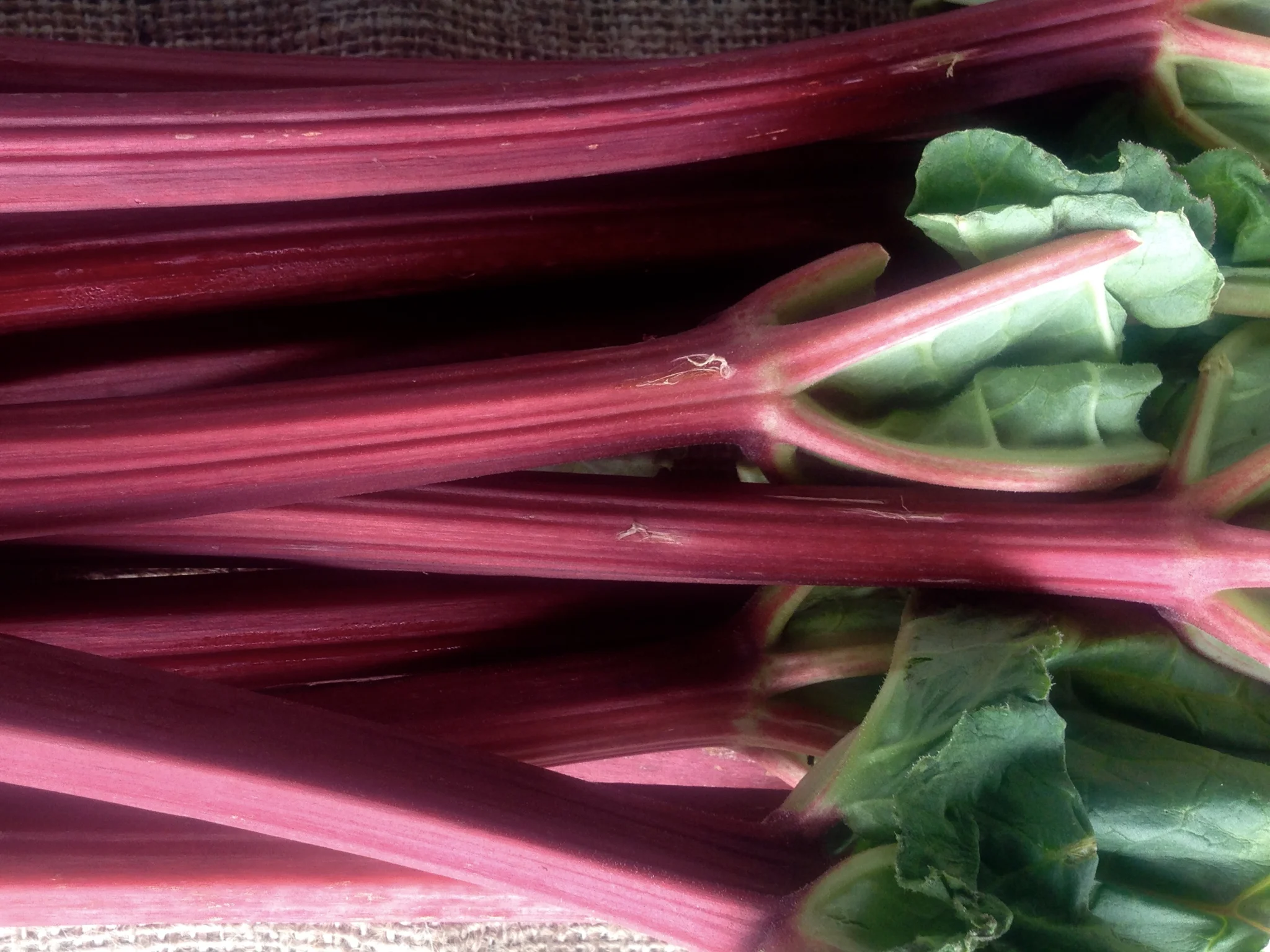
We shared a pitcher of sparkling rhubarb cordial, and it reminded us how spectacular the colour and how strong the flavour can be. Rhubarb is a vegetable, native arguably to either China or Russia. Who knew? We always think of it as a fruit, often sweetened and part of our breakfast bowl. That’s how we have been enjoying it this week.
But of course it is a vegetable (no seeds…), and one traditionally grown in New Zealand gardens. We thought we’d look a bit more into this pinky-red, stringy plant with delicious tartness, and gorgeous colour.
A cleanser, but leave the leaves
Rhubarb has quite the reputation for being good for you. This must stem from the fact that it was used only for medicinal purposes until the 18th century. Its roots have “purgative qualities”: it cleans you out. We now know that its leaves are poisonous, with serious quantities of oxalic acid, and it is only the coloured stalks that can be eaten. (The stalks contain oxalic acid, but in much smaller and assuredly harmless quantities..…) And so that’s why the lovely green leaves need to be discarded.
From Asia to England to us
Rhubarb’s first home was northern Asia. We have read that although various types of rhubarb grow in different parts of the world (Siberia, the Himalayas, Tibet and Mongolia), true rhubarb - that with the active (purgative) elements - is the Chinese variety. Rhubarb first travelled to Europe in classical times as a dried root with medicinal qualities. And then, in the 18th century, the vegetable fruit was introduced to English tables.
The story goes that the word “rhubarb” originates from its presence along the banks of the Volga River. It combines “rha” (the Greek word for the Volga) and the word “barbarum,” or barbarian and foreign. It certainly has a strong and tart flavour, but we’re not convinced it deserves the description of barbarian.
We’re sure our grandparents’ vege gardens grew rhubarb prolifically. It’s been described as one of the few plants that every gardener can manage to harvest – and at one time it was found in most New Zealand gardens, often near or on the compost heap.
A national hero
And there’s a special New Zealand connection to the word rhubarb. The word has acquired, over the years, many colloquial meanings and usages, but a special New Zealand usage was as a code. We have read that “rhubarb” was radioed to media to inform once, in 1958, Sir Ed Hillary and his New Zealand team, driving converted Ferguson tractors, had reached the South Pole overland. They were the first to do so since Captain Scott and his crew arrived in 1912. And so rhubarb, it seems, forms part of a story of a New Zealand national hero…..delicious.
Jams and chutneys and salads and raw
Good New Zealand cookbooks are full of recipes for jams and chutneys made with rhubarb, recognising that point of rhubarb patches in most New Zealand gardens. We have read jam combinations for rhubarb with banana, blackcurrant, ginger, orange and (especially tempting) the rhubarb and strawberry combination.
Our favourite rhubarb is in the breakfast bowl, stalks chopped and roasted with brown sugar and vanilla, before added with yoghurt to cereal or porridge. The same roasted stalks can be tossed gently through a green salad (think rhubarb, toasted walnuts, goats cheese and rocket). Another lovely idea is to cook, blend, cool - and then add a sparkling something (water or otherwise) for that rhubarb drink.
And we’ve also tried raw rhubarb - for a raw rhubarb idea, click here.